Tinggalkan pesan
Jika Anda tertarik dengan produk kami dan ingin mengetahui detail lebih lanjut, silakan tinggalkan pesan di sini, kami akan membalas Anda sesegera mungkin.

Importing or purchasing tomato paste in bulk is a high-volume, high-stakes decision for food manufacturers, distributors, and brands. Beyond simply locking in a competitive price per metric ton, securing the right specification, packaging, and supplier credentials directly determines product quality, shelf stability, and profit margins.
Before signing a supply agreement or placing a bulk order, here are the critical factors every professional buyer must evaluate.
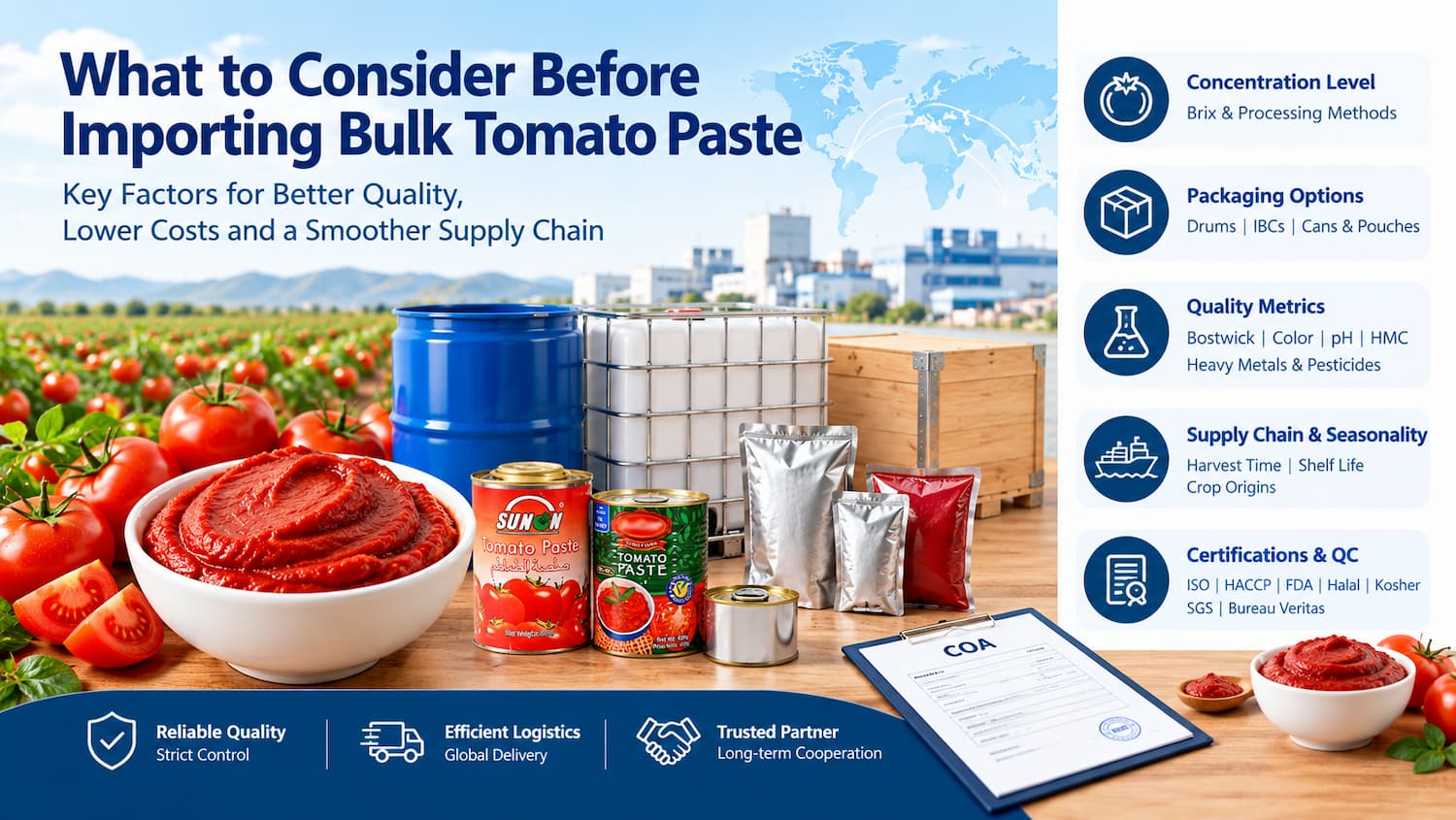
1. Concentration Level: Brix & Processing Methods
Tomato paste is graded primarily by its concentration level, measured in Brix (percentage of soluble solids, mainly natural sugars). Choosing the wrong Brix level can increase freight costs or cause processing issues in end products.
Hot Break (HB) vs. Cold Break (CB):
2. Packaging Options for Bulk Volume
Packaging selection impacts logistics costs, storage conditions, and handling equipment requirements at your receiving facility. Bulk tomato paste is typically distributed in three primary formats:
| Packaging Type | Typical Volume | Best Used For | Key Advantages |
| Aseptic Drums | 220–240 kg / drum | Mid-to-large food processing factories | Standardized handling, long shelf life without refrigeration until opened. |
| Aseptic Wooden Bins / IBCs | 1,000–1,300 kg / bin | High-volume industrial re-processors | Maximizes container space utilization, reduces unit packaging cost. |
| Cans & Stand-Up Pouches | 70g–4.5kg / unit | Foodservice, wholesale distribution, retail re-sellers | Ready for immediate distribution or commercial kitchen use without re-packing. |
When reviewing a supplier's Certificate of Analysis (COA) or product spec sheet, focus on these five key parameters:
Bostwick Consistency: Measures viscosity (flow distance in centimeters over 30 seconds at 20℃). Lower numbers indicate a thicker product.
Color (A/B Ratio): Measured via colorimeter. A ratio above 2.0 reflects a rich, vibrant natural red, indicating fresh raw tomatoes and proper thermal processing without burning.
pH Level & Acidity: Typically ranges between 4.0 and 4.4. Low pH prevents microbial growth while maintaining natural tartness.
Howard Mold Count (HMC): Indicates the quality of raw tomatoes used. Premium industrial grades keep HMC strictly under 30%–40% positive fields.
Heavy Metals & Pesticide Residues: Ensure full compliance with destination-market limits (e.g., EU, FDA, or ISO standards).
Tomato harvesting and processing operate on strict regional seasonal cycles:
Northern Hemisphere (e.g., China, Mediterranean, California): Peak harvesting and processing run from July to October. Buying during or immediately after harvest secures fresh production runs and optimum pricing.
Shipping & Shelf Life: Aseptically packaged bulk tomato paste typically carries a 24-month shelf life when stored in a cool, dry place ($<25^\circ\text{C}$). Factor ocean transit lead times into your inventory planning.
To prevent import delays or compliance issues at customs, ensure your bulk supplier holds valid food safety certifications required by your region:
Global Food Safety Certifications: ISO 22000, FSSC 22000, BRCGS, or HACCP.
Regional/Market Compliance: FDA Registration (US), Halal, or Kosher certifications depending on end-market demands.
Third-Party Inspection: Work with suppliers that accept pre-shipment inspections from independent agencies like SGS or Bureau Veritas to verify quality, quantity, and container loading condition.
Match Brix to Application: Use 28–30% Hot Break for viscosity (ketchup/sauces) and 36–38% Cold Break for concentration and re-packing.
Optimize Logistics: Select aseptic drums or 1000L IBC bins based on your factory's unloading equipment.
Verify COA Parameters: Pay close attention to Bostwick, A/B color ratio, and Howard Mold Count.
Audit Certifications: Confirm HACCP, ISO/FSSC, and relevant market certifications prior to issuing a Purchase Order.
We supply premium-grade industrial tomato paste in aseptic drums and customized packaging for global food processors and distributors. Contact our sales team today to request product spec sheets, COAs, and current FOB/CIF pricing.


 English
 Français
 Deutsch
 Italiano
 Pусский
 Español
 Português
 Melayu
 Indonesia
 العربية